100% Australian
How Long Does Caffeine Last? When to Stop Before Sleep on Any Shift
You finish the shift. You get home. You're cooked, but you're lying there staring at the ceiling.
A lot of the time that's the caffeine from hours ago, still doing its job after the job is done.
Here's how long caffeine hangs around, and how to set a cut off time that suits your roster.
How long does caffeine stay in your system?
Caffeine is absorbed fast and almost completely. Most people feel it within the first hour.
Getting rid of it is slower. In healthy adults the average half-life is around 5 hours. That means 5 hours after your last can or coffee, about half the caffeine is still in your blood. Another 5 hours later, about a quarter is still there.
That 5 hours is an average, not a rule. Your liver does the work, and a few things change the speed:
- Smoking can cut the half-life by up to half, so smokers clear caffeine faster
- Pregnancy slows it right down, up to around 15 hours late in pregnancy
- Some medications and liver conditions slow it too
- Genetics play a part, which is why some people can sleep after an espresso and others can't sleep after a lunchtime coffee
What the research says about caffeine and sleep
The study most people cite is from 2013, led by Christopher Drake at the Henry Ford Sleep Disorders and Research Center and published in the Journal of Clinical Sleep Medicine.
Participants took 400mg of caffeine at bedtime, 3 hours before bed, or 6 hours before bed. Caffeine disrupted sleep at every one of those times. Even at 6 hours out, it cut total sleep by more than an hour.
The bit worth noting: participants often didn't realise their sleep had been affected. You can feel like you slept fine and still have lost an hour.
400mg is a big dose, roughly two and a half 500ml energy drinks. Smaller doses will have a smaller effect. The principle still holds.
The simple maths
Using the average 5 hour half-life, here's roughly what's left over time:
| Last drink | 0 hours | 5 hours | 10 hours | 15 hours |
|---|---|---|---|---|
| 250ml energy drink (80mg) | 80mg | 40mg | 20mg | 10mg |
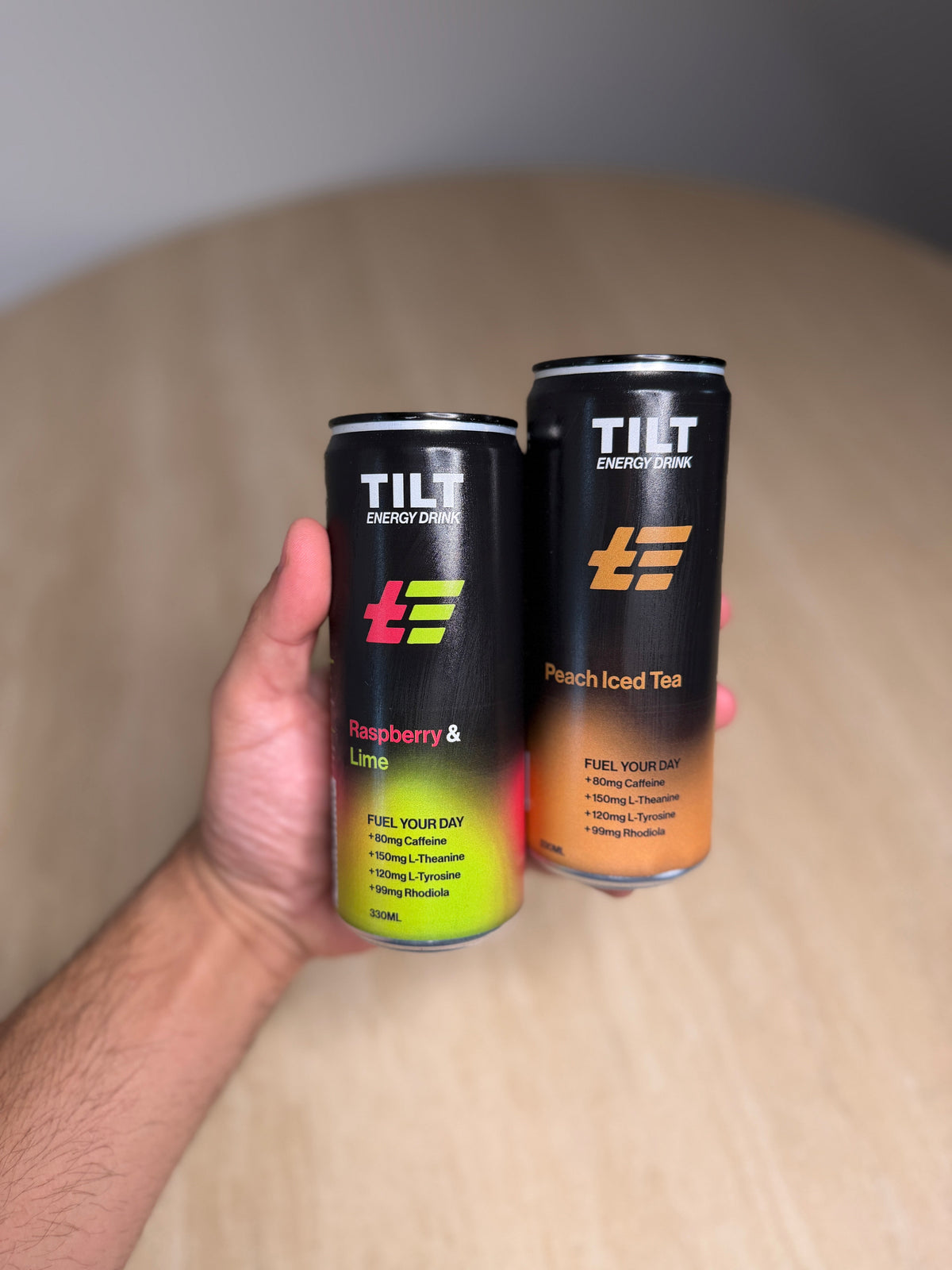
| 330ml TILT (105.6mg) | 105.6mg | 52.8mg | 26.4mg | 13.2mg |
| 500ml energy drink (160mg) | 160mg | 80mg | 40mg | 20mg |
| Two 500ml cans (320mg) | 320mg | 160mg | 80mg | 40mg |
Two things fall out of that table.
- Timing matters. The same can at the start of the shift and at the end of the shift are two very different things by bedtime.
- Dose matters. Two big cans at knock off leaves more caffeine in you 10 hours later than a single small can has at the 5 hour mark.
Check your own cans in our Australian energy drink caffeine comparison.
Setting your caffeine cut off by roster
A common starting point is no caffeine in the 6 hours before you plan to sleep. If you're sensitive, push it out to 8 or more.
Work it back from when you want to be asleep, not from when you finish.
| Roster | Planned sleep | Last caffeine by |
|---|---|---|
| Day shift, 6am to 4pm | 9:30pm | 3:30pm |
| Early start, 4:30am alarm | 8:30pm | 2:30pm |
| Afternoon shift, 2pm to 10pm | 11:30pm | 5:30pm |
| Night shift, 7pm to 7am | 8:30am | 2:30am |
| FIFO night swing, 6pm to 6am | 7:30am | 1:30am |
The night shift rows are the ones that catch people out. That 5am can to get over the hump lands right on top of your sleep.
What to do instead late in the shift
When you hit the wall past your cut off, you've got a few options that don't come home with you.
- A 15 to 20 minute nap on your break if your workplace allows it
- Bright light and a walk around
- Cold water and a light snack rather than a heavy meal
- Talking to someone. Conversation is harder to nod off in than silence
Our full list of night shift tips covers these in more detail.
Don't forget the hidden caffeine
When you're counting, include everything:
- Coffee, including the servo coffee on the drive
- Tea and iced tea
- Cola
- Pre-workout
- Chocolate, in smaller amounts
For daily totals rather than timing, see how much caffeine is too much.
FAQ
How long does caffeine last in your body?
The average half-life of caffeine in healthy adults is about 5 hours. Half the caffeine is still in your system 5 hours after you drink it, and around a quarter after 10 hours. This varies a lot between people.
How many hours before bed should I stop caffeine?
A 2013 study found 400mg of caffeine taken 6 hours before bed still reduced sleep by more than an hour. At least 6 hours is a sensible starting point. Sensitive people may need longer.
Can you sleep after an energy drink?
Some people can, but caffeine can still reduce sleep quality and length even if you fall asleep. Research shows people often don't notice the lost sleep.
How long does a 500ml energy drink keep you awake?
A 500ml energy drink in Australia usually contains about 155 to 160mg of caffeine. With a 5 hour half-life, roughly 80mg is still in your system 5 hours later.
This article is general information, not medical advice. If you're pregnant, on medication or have a health condition, talk to your GP about caffeine.
Enough to get through. Each 330ml can of TILT has 105.6mg of natural caffeine. Try the Trial Pack: 4 cans for $24 with a 100-day refund guarantee.